Proper jewelry storage is essential to prevent tarnishing and maintain your precious pieces for years to come. In 2026, advanced anti-tarnish solutions and storage methods can protect sterling silver, gold, and other metals from oxidation. This comprehensive guide reveals professional techniques used by jewelers and collectors to preserve jewelry value and appearance through optimal storage conditions.
Understanding What Causes Jewelry Tarnishing
Tarnishing occurs when metals react with environmental factors, creating a discolored surface layer. Sterling silver jewelry is particularly susceptible to tarnishing when exposed to sulfur compounds in air, moisture, and everyday items like rubber, wool, and certain papers. According to 2026 metallurgy research, humidity levels above 60% accelerate tarnishing by up to 300% compared to controlled environments.
The primary enemies of jewelry include oxygen, hydrogen sulfide, and moisture, which create chemical reactions that dull metal surfaces. Copper alloys in sterling silver are especially reactive, while pure gold resists tarnishing but can still lose luster when improperly stored. Understanding these chemical processes helps you choose the right storage solutions to protect your investment.
Essential Anti-Tarnish Storage Solutions for 2026
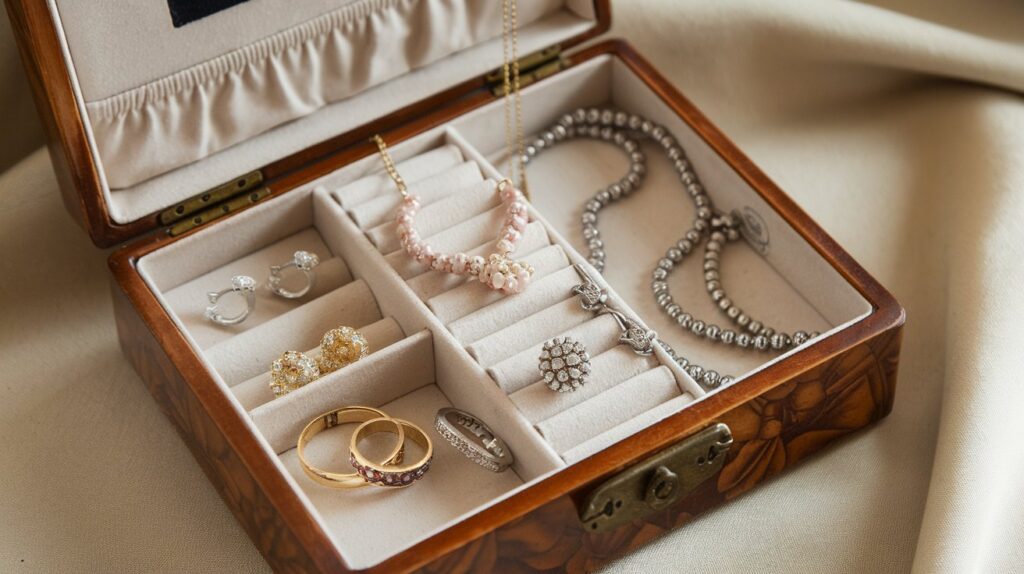
Modern anti-tarnish jewelry boxes incorporate advanced materials that actively absorb harmful gases and maintain optimal humidity levels. The latest 2026 models feature airtight seals, moisture-absorbing crystals, and specially treated fabrics that neutralize sulfur compounds. Professional jewelers recommend boxes with individual compartments lined with anti-tarnish cloth to prevent piece-to-piece contact and scratching.
Anti-tarnish strips have evolved significantly, with new formulations lasting up to 24 months compared to the 6-month lifespan of older versions. These strips contain activated carbon and zeolites that continuously absorb corrosive gases. Place one strip per compartment in your jewelry box, ensuring they don’t directly touch your pieces to prevent chemical transfer.
Climate Control Requirements for Optimal Storage
Maintaining proper environmental conditions is crucial for preventing jewelry tarnishing. The ideal storage environment maintains 45-55% relative humidity and temperatures between 65-70°F. Professional-grade dehumidifiers designed for jewelry storage can maintain these precise conditions, while silica gel packets provide localized moisture control in smaller storage containers.
Best Anti-Tarnish Products That Actually Work
The Lori Greiner anti-tarnish jewelry box remains a top choice in 2026, featuring patented R2 anti-tarnish technology that prevents tarnishing for up to 35 years. Alternative options include Pacific Silvercloth-lined boxes, which use a specially treated fabric that absorbs gases while maintaining metal shine. For budget-conscious consumers, simple anti-tarnish pouches provide effective protection at a fraction of the cost.
Preventing Necklace and Chain Tangles During Storage
Tangled chains can cause permanent damage and stress points that weaken metal over time. The hanging storage method remains the most effective approach for preventing tangles while maintaining chain integrity. Use individual hooks or specialized necklace organizers that allow each piece to hang freely without contact with other jewelry.
For travel jewelry storage, roll each necklace in soft tissue paper or anti-tarnish cloth before placing in separate compartments. This method prevents tangling while providing anti-tarnish protection during transport. Professional jewelers recommend never storing multiple chains together without individual protection, as friction can cause both tangling and surface damage.
Hanging vs Flat Storage: Which Method Is Better
The debate between hanging and flat storage depends on jewelry type and frequency of use. Hanging storage works best for everyday pieces and delicate chains, as it prevents stress on weak points and maintains natural drape. Flat storage is ideal for vintage pieces, heavy necklaces, and items with delicate settings that could be damaged by gravitational stress over time.
Travel Storage Solutions for Active Lifestyles
Modern travel jewelry cases feature individual cushioned compartments with anti-tarnish properties built into the lining. Roll-up organizers with clear pockets allow easy identification while maintaining separation between pieces. For frequent travelers, consider investing in a portable dehumidifier system that maintains optimal conditions in hotel rooms and varying climates.
Material-Specific Storage Guidelines
Different metals require tailored storage approaches to prevent tarnishing and damage. Sterling silver jewelry needs the most protection due to its high reactivity, requiring airtight containers with active anti-tarnish materials. Gold jewelry, while more resistant to tarnishing, still benefits from proper storage to prevent scratching and maintain luster.
Understanding the 2:1:1 rule in jewelry storage helps organize different materials effectively. This rule suggests using two parts anti-tarnish protection, one part physical separation, and one part climate control for optimal preservation. This balanced approach addresses chemical, physical, and environmental threats simultaneously.
Sterling Silver Storage Requirements
Sterling silver requires the most stringent storage conditions due to its copper content, which readily reacts with sulfur compounds. Store silver pieces in individual anti-tarnish pouches or compartments lined with Pacific Silvercloth. Avoid storing silver near rubber bands, paper products, or wool items that can accelerate tarnishing through sulfur emission.
Gold Jewelry Preservation Best Practices
While gold jewelry resists tarnishing better than silver, proper storage maintains its luster and prevents scratching. Store gold pieces in soft cloth pouches or padded compartments, separating different karat weights to prevent cross-contamination. Higher karat gold requires less protection, but all gold jewelry benefits from dust-free, moisture-controlled environments.
How the Rich Store Their Jewelry: Professional Methods
Wealthy collectors and professional jewelers employ sophisticated storage systems that go beyond basic anti-tarnish boxes. Professional jewelry safes feature climate-controlled environments, individual lighting for each piece, and automated humidity regulation. These systems maintain precise conditions year-round, ensuring valuable collections retain their beauty and value.
High-end storage solutions include custom-designed vault rooms with museum-quality environmental controls, individual piece tracking systems, and specialized lighting that allows appreciation without UV damage. While these solutions may be excessive for average collections, the principles of climate control, individual protection, and regular monitoring apply to all jewelry storage scenarios.
Safe Home Storage Solutions for Jewelry
Creating an effective home jewelry storage system doesn’t require expensive equipment but does demand attention to detail. Choose a location away from bathrooms and kitchens where humidity and temperature fluctuate. Bedroom closets often provide stable conditions, especially when supplemented with moisture control products.
Consider investing in a home safe with jewelry-specific features including adjustable shelving, anti-tarnish lining, and humidity control. These safes protect against theft while maintaining proper storage conditions. For valuable collections, annual professional cleaning and inspection ensure stored pieces remain in optimal condition despite long-term storage.
Common Storage Mistakes That Accelerate Tarnishing
Many jewelry owners unknowingly accelerate tarnishing through common storage mistakes that seem harmless. Storing jewelry in bathrooms exposes pieces to humidity extremes and chemical residues from beauty products. Plastic bags, while seeming protective, can trap moisture and create ideal tarnishing conditions.
Another critical mistake involves storing different metals together without proper separation. This can cause galvanic corrosion where dissimilar metals interact, accelerating deterioration. Always use individual pouches or compartments, even within anti-tarnish jewelry boxes, to prevent metal-to-metal contact and maintain piece integrity.
Related video about how to store jewelry to prevent tarnishing
This video complements the article information with a practical visual demonstration.
Frequently Asked Questions
What is the 2:1:1 rule in jewelry storage?
The 2:1:1 rule refers to using two parts anti-tarnish protection (strips, pouches, treated cloth), one part physical separation (individual compartments), and one part climate control (humidity regulation, temperature stability). This balanced approach addresses chemical, physical, and environmental threats to prevent tarnishing and damage during storage.
Does Kyle Cavan jewelry tarnish?
Kyle Cavan jewelry, like most fashion jewelry containing base metals, can tarnish when exposed to moisture, air, and chemicals. The tarnishing rate depends on the specific metal composition and coating quality. Proper storage in anti-tarnish pouches or boxes significantly extends the life and appearance of Kyle Cavan pieces.
Is it better to hang or store jewelry flat?
The choice between hanging and flat storage depends on the jewelry type. Hanging works best for everyday chains and delicate necklaces, preventing tangles and stress points. Flat storage is ideal for heavy pieces, vintage jewelry, and items with delicate settings that could be damaged by gravitational stress over extended periods.
How do the rich store their jewelry?
Wealthy collectors use professional-grade storage systems including climate-controlled safes, custom vault rooms with museum-quality environmental controls, and individual piece tracking systems. These solutions maintain precise humidity and temperature while providing security, often featuring automated monitoring and specialized anti-tarnish technologies.
Which anti-tarnish jewelry box is best for sterling silver?
The best anti-tarnish jewelry boxes for sterling silver feature airtight seals, Pacific Silvercloth or similar treated fabric lining, and individual compartments. Top-rated options include the Lori Greiner jewelry box with R2 technology and boxes lined with activated carbon materials that actively absorb sulfur compounds for up to 35 years.
How long do anti-tarnish strips last?
Modern anti-tarnish strips in 2026 last 18-24 months under normal conditions, significantly longer than older 6-month versions. Strips containing activated carbon and zeolites provide the longest protection. Replace strips when they change color or when you notice increased tarnishing, and never let strips directly touch jewelry pieces.
| Storage Method | Best For | Key Benefit |
|---|---|---|
| Anti-tarnish jewelry boxes | Daily wear jewelry | Complete tarnish prevention |
| Individual anti-tarnish pouches | Sterling silver pieces | Maximum metal protection |
| Hanging organizers | Chains and necklaces | Prevents tangling |
| Climate-controlled safes | Valuable collections | Professional preservation |
| Travel jewelry cases | Mobile storage needs | Portable protection |