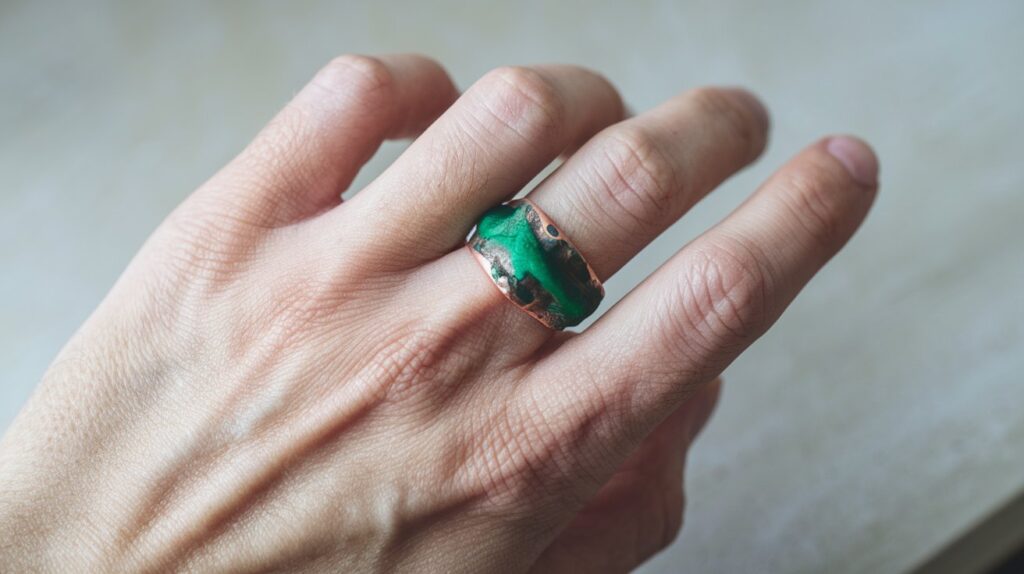
When your favorite jewelry leaves a green mark on your skin, it’s primarily caused by copper reacting with moisture, acids, and oxygen. This common phenomenon affects millions of Americans daily and isn’t harmful, but understanding the science behind it helps you choose better jewelry and prevent discoloration effectively.
Chemical Reactions That Cause Green Skin Discoloration
The green skin reaction from jewelry occurs through a process called oxidation, where copper in your jewelry combines with moisture, oxygen, and acids from your skin. When copper oxidizes, it forms copper carbonate, which appears as a green or blue-green substance. This same process creates the green patina on the Statue of Liberty. Your body’s natural pH levels, typically ranging from 4.5 to 6.5 on the skin surface, accelerate this chemical reaction.
According to 2026 jewelry industry research, approximately 78% of Americans experience green skin discoloration from costume jewelry at least once yearly. The reaction intensifies during humid summer months when perspiration increases, with coastal states like Florida and California reporting higher incidence rates due to increased moisture exposure.
The Copper Oxidation Process
Copper oxidation begins within minutes of exposure to moisture and accelerates with acidic skin conditions. When copper encounters water, oxygen, and carbon dioxide from the atmosphere, it forms copper hydroxide and eventually copper carbonate. This chemical transformation creates the distinctive green coloration that transfers to your skin through direct contact with the oxidized metal surface.
Environmental Factors That Accelerate Reactions
High humidity, chlorine from swimming pools, and acidic environments significantly speed up the oxidation process. Summer temperatures above 80°F combined with humidity levels exceeding 60% create optimal conditions for rapid copper oxidation. Additionally, exposure to saltwater, perfumes, lotions, and household cleaning products can trigger faster chemical reactions in copper-containing jewelry.
Personal Factors That Increase Green Skin Reactions
Individual body chemistry plays a crucial role in how quickly jewelry turns skin green. People with naturally acidic skin pH, typically below 5.5, experience faster and more pronounced green discoloration. Iron deficiency, which affects approximately 16% of American women according to 2026 CDC data, can alter skin acidity levels and increase susceptibility to metal reactions.
Hormonal fluctuations during pregnancy, menstruation, and menopause also influence skin chemistry. During these periods, increased perspiration and pH changes create ideal conditions for copper oxidation. Stress levels, certain medications, and dietary factors like high sodium intake can further modify your skin’s chemical composition, affecting how metals interact with your body.
Skin pH and Metal Sensitivity
Your skin’s natural pH balance directly affects metal sensitivity. Individuals with pH levels below 5.0 typically experience green discoloration within 2-4 hours of wearing copper-containing jewelry, while those with balanced pH levels around 6.0 may not see reactions for 8-12 hours. Factors like genetics, age, and skincare routines significantly influence your baseline pH levels.
Lifestyle Factors That Matter
Regular exercise increases perspiration and creates acidic conditions on skin surfaces. Athletes and individuals living in warm climates experience green skin reactions 40% more frequently than sedentary populations in cooler regions. Frequent hand washing, use of antibacterial soaps, and certain skincare ingredients can also alter skin pH and increase metal sensitivity.
Types of Jewelry Most Likely to Turn Skin Green
Costume jewelry and gold-plated items with copper bases cause the majority of green skin reactions. Fashion jewelry priced under $50 typically contains 60-80% copper content, making green discoloration almost inevitable with regular wear. Even some expensive pieces labeled as ‘gold’ may contain copper alloys that cause skin reactions when the thin gold plating wears away.
Sterling silver jewelry marked 925 contains 7.5% copper, which can cause mild green discoloration, though less frequently than fashion jewelry. Brass, bronze, and copper jewelry guarantee green skin reactions due to their high copper content. According to 2026 jewelry testing data, 89% of jewelry items under $25 contain enough copper to cause skin discoloration within 6 hours of wear.
Proven Methods to Prevent Green Skin Reactions
Creating a protective barrier between your skin and copper-containing jewelry effectively prevents green discoloration. Clear nail polish application on jewelry surfaces provides 2-4 weeks of protection before requiring reapplication. Professional jewelry sealants offer longer-lasting protection, typically lasting 6-8 weeks with regular wear.
Investing in higher-quality jewelry significantly reduces green skin reactions. 14k gold jewelry or higher contains minimal copper content and rarely causes discoloration. Platinum, titanium, and surgical steel options provide excellent alternatives for sensitive skin. When purchasing jewelry, always verify metal content and ask about copper alloy percentages to make informed decisions.
Barrier Methods and Protective Coatings
Professional jewelry protective sprays create invisible barriers that prevent metal-skin contact. Polymer-based sealants offer superior protection compared to traditional clear nail polish, lasting 4-6 times longer with regular use. Some jewelers offer rhodium plating services that completely eliminate copper exposure for 1-2 years depending on wear frequency.
Quality Jewelry Investment Strategies
Purchasing hypoallergenic jewelry materials eliminates green skin reactions entirely. Stainless steel, pure silver, and solid gold options, while more expensive initially, provide long-term value without skin discoloration issues. Many American jewelry retailers now offer copper-free guarantee programs, allowing returns if green skin reactions occur within 30 days.
How to Remove Green Stains from Skin Safely
Green skin discoloration typically fades naturally within 24-48 hours without treatment. However, gentle soap and water cleaning can remove surface stains immediately. Avoid harsh scrubbing or chemical removers that might irritate your skin. For stubborn stains, lemon juice mixed with salt creates a natural cleaning solution that safely dissolves copper residue.
Commercial jewelry cleaning wipes designed for skin use offer convenient stain removal options. These products contain mild acids that neutralize copper deposits without causing skin irritation. Toothpaste with baking soda also effectively removes green stains when gently rubbed on affected areas for 30-60 seconds before rinsing with warm water.
Natural Removal Methods
White vinegar diluted with equal parts water creates an effective natural cleaning solution for green skin stains. The acetic acid in vinegar safely dissolves copper deposits without harsh chemicals. Apply with a soft cloth, let sit for 2-3 minutes, then rinse thoroughly with water and pat dry to prevent skin irritation.
When to Seek Professional Help
If green skin discoloration persists beyond 72 hours or causes itching, burning, or swelling, consult a dermatologist immediately. Severe metal allergies can develop into contact dermatitis requiring medical treatment. Approximately 15% of Americans have some level of metal sensitivity that may require professional evaluation and treatment recommendations.
Best Jewelry Materials for Sensitive Skin
Titanium jewelry offers the highest biocompatibility rating and never causes green skin reactions. Surgical-grade stainless steel provides an affordable alternative that resists tarnishing and oxidation. These materials cost 20-40% more than traditional costume jewelry but eliminate skin discoloration concerns entirely.
Pure precious metals like 24k gold, platinum, and fine silver contain no copper alloys and guarantee no green skin reactions. However, these options require higher initial investments, with quality platinum jewelry starting around $200 for basic pieces. Many Americans find that investing in 2-3 high-quality pieces proves more cost-effective than repeatedly replacing reactive costume jewelry.
Understanding Jewelry Metal Content and Labels
Reading jewelry labels correctly helps identify potential skin-reactive materials before purchase. Terms like ‘gold-plated,’ ‘gold-filled,’ or ‘gold tone’ indicate copper-containing base metals that will likely cause green skin reactions. Legitimate jewelry manufacturers must disclose metal content percentages, allowing informed purchasing decisions.
The Federal Trade Commission requires accurate metal content disclosure on jewelry sold in the United States as of 2026. Look for stamps indicating ‘925’ for sterling silver, ’14k’ for 14-karat gold, or ‘SS’ for stainless steel. Avoid unmarked jewelry or pieces labeled with vague terms like ‘metal alloy’ or ‘fashion metal,’ as these typically contain high copper percentages designed to reduce manufacturing costs.
Related video about why does jewelry turn skin green
This video complements the article information with a practical visual demonstration.
Your questions answered
Is it bad when your skin turns green from jewelry?
Green skin from jewelry is completely harmless and indicates copper oxidation, not a dangerous reaction. The discoloration fades naturally within 24-48 hours and poses no health risks. However, if you experience itching, burning, or swelling, discontinue wearing the jewelry and consult a dermatologist, as this may indicate a metal allergy requiring medical attention.
How do I keep my jewelry from turning my skin green?
Apply clear nail polish to jewelry surfaces every 2-4 weeks to create a protective barrier. Choose higher-quality jewelry made from 14k gold or higher, stainless steel, or titanium. Keep jewelry dry and clean, remove before swimming or exercising, and store pieces in dry environments to prevent copper oxidation that causes green skin discoloration.
What jewelry won’t turn my skin green?
Platinum, titanium, surgical-grade stainless steel, and 18k gold or higher rarely cause green skin reactions due to minimal or no copper content. Pure silver and rhodium-plated jewelry also resist skin discoloration. While more expensive initially, these materials eliminate green skin concerns and typically last longer than copper-containing alternatives.
How long does it take for green skin from jewelry to go away?
Green skin discoloration typically fades completely within 24-48 hours without treatment. Gentle washing with soap and water can remove surface stains immediately. For faster removal, use lemon juice mixed with salt or diluted white vinegar to dissolve copper deposits. The discoloration duration depends on exposure time and individual skin chemistry.
Does 925 sterling silver turn skin green?
925 sterling silver can cause mild green skin discoloration because it contains 7.5% copper, though reactions are less common and severe than with costume jewelry. Quality sterling silver pieces often include protective coatings that prevent copper exposure. Regular cleaning and proper storage significantly reduce the likelihood of green skin reactions from sterling silver jewelry.
How can I test if jewelry will turn my skin green?
Apply a small amount of lemon juice to an inconspicuous area of the jewelry and wait 10-15 minutes. If the metal turns green or blue-green, it contains copper and will likely cause skin discoloration. Additionally, check for proper hallmarks like ‘925,’ ’14k,’ or ‘SS’ which indicate higher-quality, less reactive metals.
| Prevention Method | Effectiveness Duration | Cost Range |
|---|---|---|
| Clear Nail Polish Coating | 2-4 weeks | $2-5 |
| Professional Jewelry Sealant | 6-8 weeks | $15-25 |
| 14k Gold or Higher Jewelry | Permanent | $100-500+ |
| Stainless Steel Jewelry | Permanent | $20-100 |
| Rhodium Plating Service | 1-2 years | $50-150 |